Hypertonic Pelvic Floor Muscles
The pelvic floor is a group of muscles located inside the pelvis. These muscles help hold the weight of your organs and they are the gatekeepers for bowel movements and urination.
Female pelvic floor model
The pelvic floor muscles are positioned in a way that they counter the pressure coming from above when the abdominal muscles are activated. Having strong pelvic floor muscles helps create core muscle stability. The bladder, the sex organs, and the rectum are all located inside the pelvis, surrounded by the pelvic floor muscles. The pelvic floor and the bladder work opposite of each other - as the bladder is filled it relaxes and expands to contain more fluid; simultaneously, the pelvic floor muscles will contract to prevent any liquid from escaping. Once you decide to urinate, the pelvic floor muscles relax and the bladder gently contracts to allow passage of liquid. A similar process occurs with bowel movements. The rectum is the location where feces is stored until ready to be expelled, when having a bowel movement the pelvic floor muscles will relax to allow passage of feces. This is a simplified way of thinking about how the body controls our bowel and bladder, however, it allows us to explore the complications that can happen which may lead to urinary incontinence, diarrhea, constipation, pain during sex, and painful bladder, amongst other issues.
Hypertonic pelvic floor muscles occurs as result of the pelvic floor muscles being contracted and having a hard time relaxing. Hypertonic pelvic floor muscles can cause pain with sex, constipation, urinary urgency, pelvic pain, and tightness of the surrounding muscles of the hip (like the hamstrings and piriformis). Hypertonic pelvic floor muscles can occur for many reasons such as trauma to the muscles from childbirth, continued breath-holding (like with exercising or with stress), or prolonged “tummy sucking”, according to the Pelvic Floor First website, a leader in pelvic health awareness. This can also happen from holding your bladder for long periods of time. Some people who have developed hypertonic pelvic floor muscles reported holding their urine because of a busy work schedule not allowing them bathroom breaks (ie. school teachers, nurses, commercial drivers, etc.) or those who wait to use their private bathroom rather than public bathrooms.
Hypertonic pelvic floor muscles symptoms may also present as:
According to the International Journal of Sports Physical Therapy, physical therapists are considered the movement experts in the medical field. Physical therapists analyze movements and positions that can help or could be worsening your pelvic floor hypertonicity, allowing for a better understanding of what is going on, which is crucial for addressing the problem. Speaking with a pelvic health therapist is helpful to receive a personalized plan to address your symptoms, understand the root cause, provide helpful bowel and bladder advice, and guide you to the level of activity you want to have. Treatment might include a combination of stretching, teaching proper diaphragmatic breathing, contraction of the core muscles (this includes the pelvic floor and diaphragm) with lifting, return to sport training, and pelvic floor relaxation techniques. Pelvic health therapists provide education about the function of the pelvic floor muscles to help you gain a deeper understanding.
The following are the top 3 stretches I recommend for hypertonic pelvic floor muscles, they are meant to be completed gently. These stretches are not intended to replace speaking with a pelvic health therapist.
Bent Leg Modified Downward Facing Dog
Straight Leg Modified Downward Facing Dog
Glute and Hip Flexor Combination

Bend both knees, point your toes and knees in, push your hips back and arch your back. Hold this position for 15 seconds for 3 repetitions. You should expect to feel a gentle pressure across your sit bones. Slowly increase the amount of time you hold until you are able to perform this stretch for 30 seconds, after that try to repeat 5 times.
 poin
poin
Keep your knees straight and point your toes in, push your hips back, and arch your back. Hold this position for 20-30 seconds and repeat 3-5 times. You should expect to feel a gentle pressure across your sit bones. As previously mentioned, slowly increase the hold time and repetitions with the goal being to hold for 30 seconds 5 times.
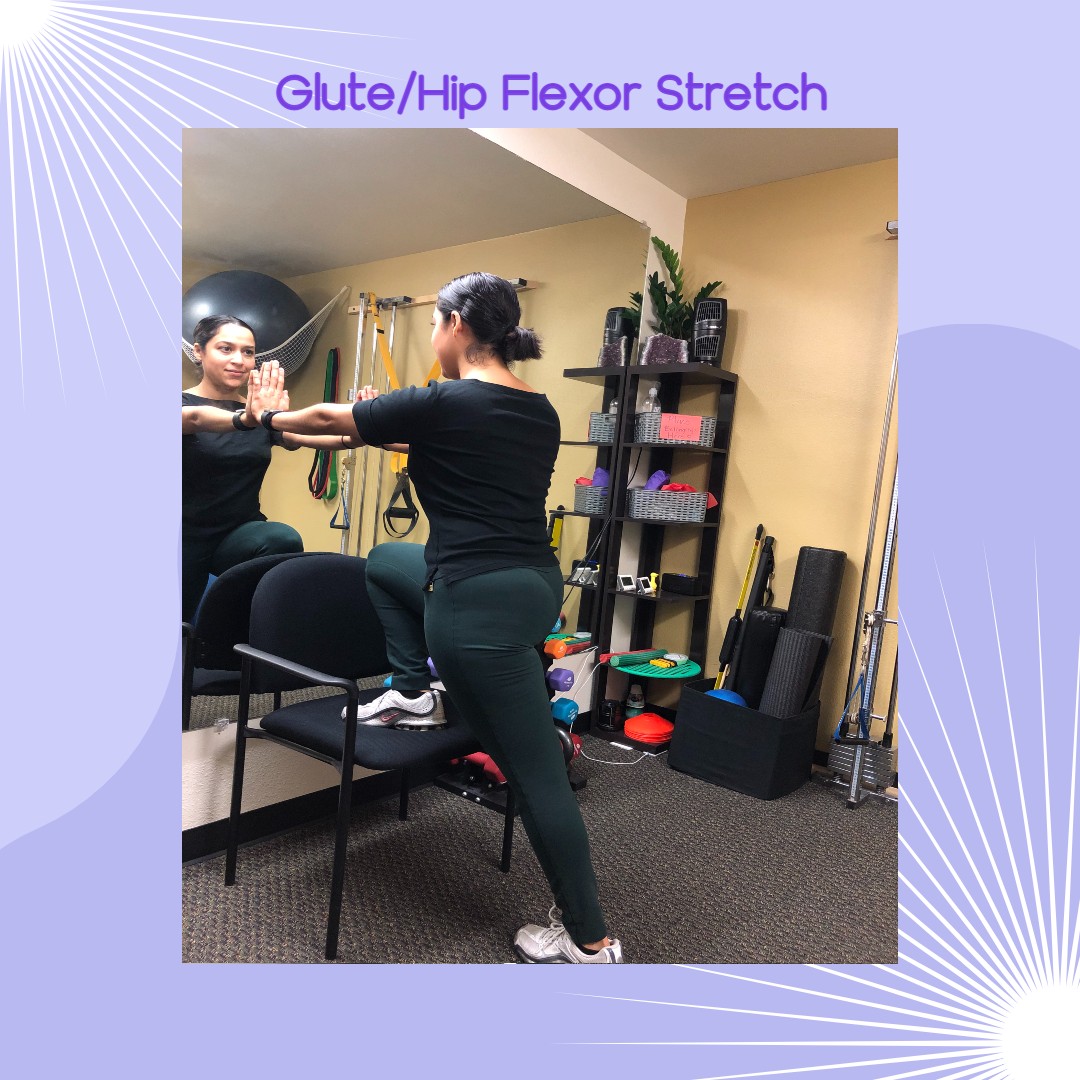
Keep your tailbone tucked in, don’t allow your back to arch. Hold this position for 20-30 seconds and repeat 3-5 times. You should expect to feel a gentle pull along the front of hip of the standing leg and a along the buttock of the leg on the chair. Slowly increase the hold time and repetitions with the goal being to hold for 30 seconds 5 times.
Also, pelvic health therapists often refer to these yoga poses that encourage pelvic floor muscle awareness, activation, and relaxation.
According to the Mayo Clinic Proceedings Journal, other non-therapy-related treatments include neuropathic modulating medication such as amitriptyline, nortriptyline, gabapentin, and pregabalin. Tricyclic antidepressants are also prescribed, but should not be the first step towards managing the symptoms as it can lead to an increase in bladder/bowel symptoms. Trigger point injections with the use of Botulinum Toxin Type A, corticosteroids, or anesthetic medication also may help with symptoms.
Contact your doctor if you are feeling symptoms that may lead you to believe you have hypertonic pelvic floor muscles to get started on your path to recovery and wellness. Feel free to contact me regarding questions you may have and to see if pelvic floor rehabilitation is right for you.


